August 1st 2026
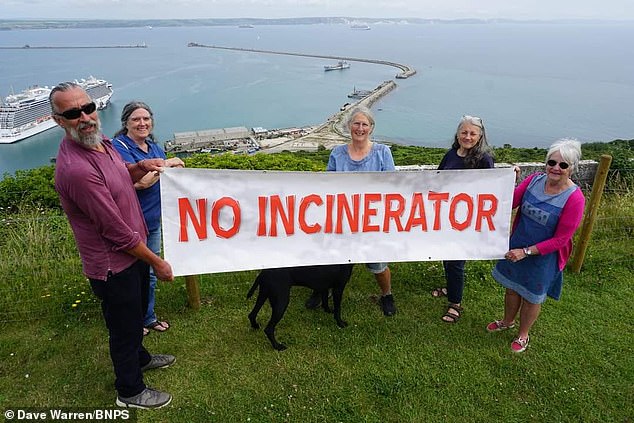
Everyone is welcome to join the anti-incinerator community at our ’next big thing’ in Weymouth on 1st August at 10am.
Short, sweet, fun and noisy - please do come along to show your support!
May 22 2026
Council leader NEW statement - Dorset does not want or need the Portland incinerator
Dorset Council’s leader, Cllr Nick Ireland, has today restated the council’s clear and longstanding opposition to the proposed waste incinerator at Portland.
He said: “The council has consistently opposed the incinerator from the outset, including refusing the original planning application and continuing to raise serious concerns through environmental permitting processes. That position has not changed. Dorset does not want or need this incinerator. The council believes it is in the wrong place, next to a World Heritage coastline, and does not align with Dorset’s waste strategy or wider environmental ambitions.
“The council also wants to be absolutely clear that Dorset Council is not in any discussions with Powerfuel, and there are no plans for Dorset’s waste to be sent to the Portland incinerator. Claims or suggestions to the contrary are incorrect.”
Dorset Council has waste arrangements in place and continues to focus on reducing waste, increasing recycling and moving towards more sustainable solutions that protect communities and the environment. The decision to allow the incinerator was taken by central government after overturning the council’s refusal.
Cllr Ireland added: “While that decision sits outside local control, we continue to speak up for residents and to challenge proposals we believe pose unacceptable risks to public health, the environment and Dorset’s reputation as a special place.”
February 2026 - Update from Environment Agency
Recent update from the Environment Agency (EA) in response to the Public Consultation.
“We are still determining the permit variation application we have received from Powerfuel Portland Ltd, to increase the types of waste that can be accepted at the permitted waste incinerator on Portland
• We have received new information from Powerfuel Portland Ltd, which we have put on our Citizen Space page for you to view - LINK
• The information includes an updated Fire Prevention Plan, additional information on waste storage, noise management, odour control and the air quality assessment
• For more information on this or the environmental permit application process, please contact us at Wessex_Engagement@environment-agency.gov.uk.”
Campaigners continue to review the EA files available on their website for more updates.
JAN 2026 - Portland Incinerator Mass Protest - Sat 17th January
Happy New Year to you - we hope you are feeling refreshed and ready for 2026!! The 17th January mass protest isn’t too far away and so this is an update to let you know what to expect.
The 17th will be a big, colourful, family-friendly and peaceful show of community strength. Everyone is welcome. We’ll begin at the Stone Towers on Portland, hear from some speakers, before marching to the Port entrance, where we will have a few more speakers before marching proudly back to the start and dispersing.
Timings:
Assemble 11.30am at the Stone Towers (Victoria Square, DT5 1AL)
Duration 90mins approx.
If you would like to be a steward, please come to the briefing at the Stone Towers at 11am.
What to bring
Please bring along your placards (see below), appropriate clothing for the weather (are we going to let a bit of rain dampen our resolve to see this monster off?!) and peaceful + defiant vibes. You could also bring a friend or neighbour who is outraged about the incinerator, but doesn’t realise that there is plenty of road to run and we’e not giving up!
Making session
If you want to get together with others for a fun and cheerful time making placards, banners or anything else for the protest, come along next Tuesday 13th January, 3.30-5pm at Easton Methodist Church on Portland (DT5 1BX). Basic materials will be provided, but if you want to bring your own, please feel free. (Note: this will be a family space, so please keep the language on any placards you make in that session family-friendly)
17/1 Helpers chat
Could you help make the action on the 17th as powerful as it can be? We need stewards and signer-uppers (adding people to our mailing list/Whatsapp). Please click here to join - you’d be very welcome: https://chat.whatsapp.com/E4anRKrHcew2eUVvELf64G
We look forward to seeing you on the 17th. Let’s make sure that Powerfuel and its potential investors get the message loud and clear: NO INCINERATOR HERE!!!
The SPIC Team
Nov 2025 - Letter from Stop Portland Incinerator Group to All Supporters:
Many of our SPWI supporters have said that they would like to respond to the Environment Agency Environmental Permit Variation application by Powerfuel to permit them to incinerate many more different types of wastes. I have been asked to give a little guidance on how to respond, so below is a quick, summarized guide, which you may find helpful. However, for those who wish to respond in more depth, I have attached a more detailed guide to the impacts, that some of the 67 new waste codes could have.
Firstly to respond to the consultation you either need to go to https://consult.environment-agency.gov.uk/psc/dt5-1db-powerfuel-portland-limited/consultation/intro/ or alternatively send an email to PSCpublicresponse@environment-agency.gov.uk with the subject: DT5 1DB, Powerfuel Portland Limited, EPR/AP3304SZ/V002: Environmental Permit Consultation, ** ** you must include this reference number to respond. Please mark your response as Confidential if you don’t want it published on the Environment Agency’s website.
It’s important that as many people as possible respond in their own words. The EA must consider the local concerns, and local environmental factors that they may not be aware of — but they can only do that if people take part.
Your response does not need to be long or technical. Even a short comment highlighting a specific concern is valuable. Please use your own wording and focus on the issues that matter most to you.
The key factors you may wish to comment on include:
· Large expansion in waste types: Powerfuel is requesting 67 new waste codes (up from 1 currently permitted), including waste streams very different from the permitted RDF.
· Increased fire risks: Several proposed waste types (especially food waste, plant matter, mixed municipal waste) can decompose and generate heat or contain hidden ignition sources, raising fire risks beyond those addressed in the previous Fire Prevention Plan.
· Increased odour risks: Many new waste codes involve biodegradable, moist, or sewage-related materials that were not considered in the original odour management plan, which is based on incinerating pre-treated RDF.
· Potential for higher noise levels: If bulky waste or mixed materials require shredding or mechanical treatment, noise impacts could increase — but this is not addressed in the application.
· More litter, dust and debris: Lightweight waste types (plastics, paper, sawdust, shavings etc.) pose higher litter and dust risks in a windy, exposed location.
· Greater vermin attraction: Food-containing waste codes are far more attractive to vermin than pre-treated RDF.
· Potential for increased emissions:
o Some new waste codes may contain Persistent Organic Pollutants (POPs) (e.g., upholstered furniture, WEEE).
o POPs containing waste may only be sent to a suitably authorised waste incinerator, requiring specialist incinerators that can completely destroy the POPs, however the Powerfuel incinerator is not authorised to accept POPs.
o POPs can reform as gases cool in the stack — which is concerning for residents living above the stack line.
· Environmental contamination risks: Incinerator bottom ash resulting from incinerating POP-containing waste must be handled separately from non-POP waste streams, as the ash is considered to be contaminated with POPs and must be managed as hazardous waste to prevent environmental contamination, unlike the permitted RDF bottom ash residues.
· Lack of evidence for safe combustion: Many waste types cannot simply be “mixed” into a homogenous fuel, as suggested by Powerfuel, without additional equipment (e.g. shredders), which is not addressed in this application.
· Transparency concerns: The original permit documents have been removed from the EA website, making it impossible for the public to cross-check claims made in the variation application.
Supporters may have read in the Dorset Echo a report on a Private Members Anti-Waste Incinerator Bill (article link below) which is extremely encouraging. However, we cannot be complacent, as it can take months, even years to get a Private Members Bills through. Therefore, we need to act now and respond to the Environment Agency’s Powerfuel Permit Variation Application Public Consultation before the 18th December, to ensure that the Environment Agency fully understand our concerns about the additional toxic waste that Powerfuel want to burn at Portland Port.
Best wishes
Debbie Tulett
https://www.dorsetecho.co.uk/news/25652920.new-hope-portland-waste-incinerator-scrapped/
on behalf of Stop Portland Waste Incinerator
End Letter.
Sept 2025
Portland Waste Incinerator approved on Appeal
On September 16th, a junior minister ignored advice from the Department for Culture, Media, and Sport and Historic England, approved a 202,000-tonne-per-year waste incinerator in the heart of Dorset’s UNESCO-designated Jurassic Coast at Portland. This terrible and mystifying decision has profound implications for Dorset and overturns the decision by Dorset Council last year to refuse planning permission. It goes in the face of opposition throughout Dorset by the local people, the Town Council, Dorset Council and many organisations including DCAN, CPRE, STOPPI, UKWIN, DDB.
Discussions are ongoing to see if the decision can be challenged and how much this will cost. It certainly looks as if the appeal decision was, at best, naïve or, at worse, negligent. They seem to have taken at face value everything that Powerfuel fed them without taking into account any of the counter arguments. A promising challenge is the threat to the UNESCO world heritage site. Another is whether the recent Supreme Court rulings on Horse Hill and the Cambrian coal mine were taken into account in the decision which relate to whether the full impact of carbon emissions to the atmosphere have been properly accounted for.
The Government reopened the public consultation on this development on the 20th September 2024 - read more about this and follow the links below.
Why This Important:
1. World Heritage Site.
The incinerator threatens Dorset’s coastline which is the location of a UNESCO World Heritage site. The UK government has now been warned by World Heritage Watch, an independent body that works with UNESCO to protect World Heritage Sites, that they need to go to UNESCO to get approval.
2. Burning Carbon
The incinerator burns waste from local, national an international sources. The waste is high in plastics and other hydrocarbon-based material. It is rich in carbon so it produces a lot of CO2 the greenhouse gas. Powerfuel describe the operation as “renewable low carbon energy to power around 30,000 homes”. Incinerators emit CO2 equivalent to the waste they burn, making them over 3 times more carbon-intensive than the decarbonising national grid so they are certainly not renewable or low carbon and the 15MW power output of the Portland Incinerator is only equivalent to a single offshore wind turbine. Some waste incinerator projects are linked to carbon capture and storage. This one is not.
3. Recycling
Incinerators destroy recyclable materials and get in the way of a circular economy that recycles and reuses resources, reducing climate impact and protecting nature. Dorset waste is already well managed: The Government Waste Interrogator data confirms that the only landfill in Dorset is inert rubble used to infill disused quarries. For 2022/23 Defra ranked Dorset as the best unitary council for recycling rates. We are well set to exceed the requirement to halve residual waste by 2042.
4. Transport
There is already overcapacity in waste incineration in the UK which forces new incinerators to import much of their waste from other countries. This incinerator is expected to require 80 HGV journeys a day, every day, through already congested residential areas; or each year 96 cargo ships transferring waste in a very exposed Port. This causes air pollution, waste spills into the sea to wash onto beaches and contaminating our international sailing and fishing waters.
5. Economic Damage
Dorset’s economy is built on our amazing landscape, seascape, culture and heritage which draws high achievers to want to live and work here. There is no welcome for tourists from waste lorries, litter, a building blight nor an industrial illuminated plume to be seen for miles along our coastline.
6. Health Risks
Homes would sit above the incinerator’s chimney exposing residents to toxic emissions. Permits merely manage pollution, not prevent it.
7. Heritage Impact
Portland stone, used in iconic buildings, is culturally significant. This incinerator embodies the wastefulness we must stop. Dorset Council planners unanimously refused it due to its harmful impact. Its ugly function symbolised in its ugly massive and unsuitable form.
Press coverage is ongoing, some recent articles are linked here:
Burning household rubbish now UK’s dirtiest form of power, BBC finds - BBC News
Portland: Government approves £150m waste incinerator - BBC News
The Government reopened the public consultation on this development on the 20th September 2024 due to an administrative error on the original consultation resulting in some people who may have wished to submit a response being unable to, read more here: (Closes on the 20th October 2024)
Permit consultation for Portland incinerator reopens - GOV.UK (www.gov.uk)
Link to submitting a response is here:
You can also view Stop Portland Incinerators Campaign Page here, where you are also able to add your name in support: